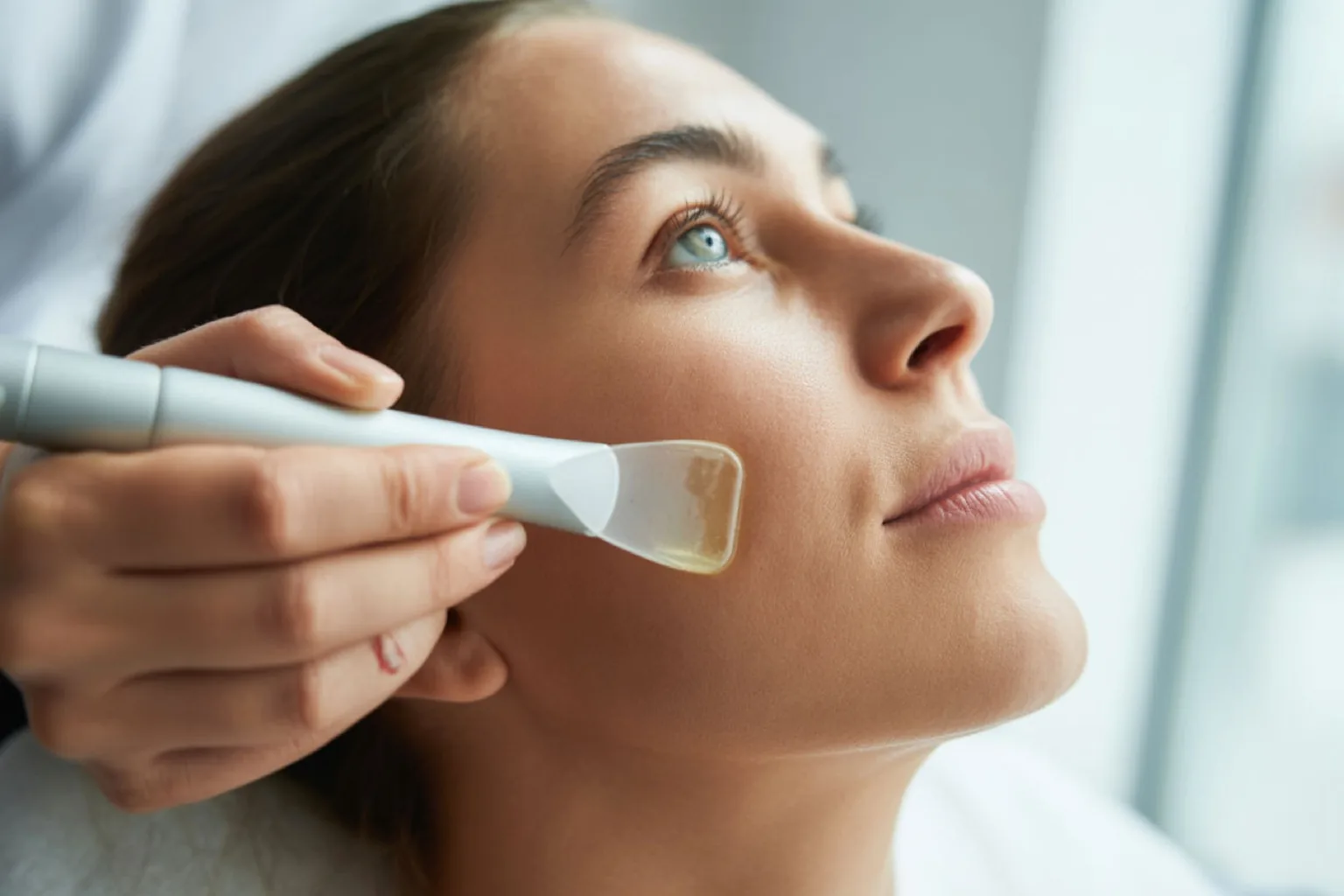
Written by the ChemicalPeel.org editorial team. Published April 17, 2026. Updated September 2, 2026.
Medically reviewed on by Stefanie Drozd, MSN-APRN. How we review · Our reviewers
Our reviewers work for or own Express Med Spa and Catara Med Spa, clinics marketed by this site's publisher. That is a commercial conflict of interest and it is worth weighing when you read a review here.
Chemical peel benefits are real, but they are also specific to the concern being treated and the depth of the peel used to treat it. Rather than one universal result, a peel offers a set of realistic outcomes that shift depending on whether you choose a superficial, medium, or deep treatment, and depending on your own skin type and how consistently you follow through on aftercare. This guide walks through what chemical peels actually improve, what those results look like and how long they last, how peels compare to other resurfacing options, and where the limits of a peel sit so you can set expectations that match the treatment you choose.
Benefits by Concern
Most people book a chemical peel for one of a handful of common concerns, and each responds differently depending on the acid and depth used.
- Sun damage and rough texture. Years of UV exposure leave skin looking rough and uneven, and peels exfoliate away damaged surface cells to encourage smoother, more even skin, with our chemical peel for sun damage guide covering which depths work best for this concern.
- Dark spots and uneven pigmentation. Certain acids and strengths help fade discoloration over a series of sessions by speeding up cell turnover in the affected areas, discussed further in our chemical peel for hyperpigmentation guide.
- Fine lines and wrinkles. Medium and deep peels can soften fine to moderate lines by encouraging collagen remodeling in the dermis, though deeply etched creases generally need a different approach, all covered in our chemical peel for wrinkles guide.
- Acne and shallow acne scarring. Peels can reduce active breakouts by clearing congested pores and, at the right depth, soften the appearance of shallow scarring left behind by past breakouts, explained in our chemical peel for acne scars guide.
- Enlarged pores. Regular exfoliation from peels can make pores appear smaller by keeping them clear of the debris and oil that stretch them out visually, covered in our chemical peel for large pores guide.
In every case, the honest framing is improvement, not elimination. A peel refines and evens out skin; it does not erase a concern permanently in one pass, and most of these benefits build gradually across a series rather than appearing fully formed after one visit.
What Results Look Like by Depth
How dramatic a result looks depends heavily on which depth category the peel falls into, as explained in full in our peel depth guide.
- Superficial peels produce subtle, cumulative brightening and smoothing that becomes more visible after a series of sessions rather than after any single treatment. Mayo Clinic says the results are subtle but increase with repeated treatments, so do not expect a dramatic transformation.
- Medium depth peels produce a more noticeable single-session change in tone and texture, visible once the week of peeling has finished, and this is usually the depth where people first describe the result as a meaningful, rather than subtle, improvement.
- Deep peels produce the most dramatic single-treatment change, particularly for wrinkles and significant sun damage, at the cost of a longer, physician supervised recovery measured in weeks rather than days.
How Long Results Last
The AAD says most results are not permanent because skin continues to age. Mayo Clinic says light peel results are subtle but increase with repeated treatments, which is why a series may be recommended. After a medium peel, it says treated skin will be noticeably smoother, and after a deep peel you will see a dramatic improvement in the look and feel of treated areas, though results may not be permanent.
Chemical Peel Benefits Across Different Skin Types
How a peel benefits your skin also depends on your skin type and tone, not just the concern you are treating. Deeper skin tones are generally more prone to post-treatment discoloration, so providers often choose gentler acids, such as lactic or mandelic acid, or more conservative strengths to get the benefit of exfoliation without triggering new pigmentation problems. Sensitive or easily irritated skin benefits from a similar approach: a milder acid applied consistently tends to produce steadier, more comfortable results than a stronger acid used less often. This is one of the clearest reasons a peel should be matched to your specific skin, rather than chosen purely by what worked for someone else.
Maintenance: Keeping Results Going
Whatever depth you choose, daily sunscreen use is the single biggest factor in how long a result holds, since new sun exposure is what drives much of the damage a peel is correcting in the first place. Ask your provider whether and when to schedule touch-up sessions; our how often to get a chemical peel guide covers spacing by depth. A consistent home skincare routine supports results between visits. A simple, sustainable routine tends to outperform an aggressive one that is abandoned after a few weeks, so building habits you can realistically keep up matters more than chasing the strongest possible products between peels.
Benefits Versus Alternatives
Chemical peels are one of several resurfacing options, and each works through a different mechanism.
Chemical Peel vs Microdermabrasion
Microdermabrasion physically abrades the surface of the skin, while a chemical peel dissolves the bond between cells. Peels can reach deeper than microdermabrasion when needed, while microdermabrasion offers a gentler, no-downtime option for very mild concerns. Our chemical peel vs microdermabrasion guide compares the two in more depth.
Chemical Peel vs Microneedling
Microneedling creates controlled micro-injuries with fine needles to stimulate collagen, rather than using an acid to affect the surface chemically. The two treatments are sometimes combined, and our chemical peel vs microneedling guide walks through when one might be favored over the other.
Chemical Peel vs Laser
Laser resurfacing uses light energy rather than acid to remove or heat tissue, and can often be more precisely targeted, but tends to involve a higher cost and, for ablative lasers, a longer recovery. Peels remain a lower-cost, widely available option for many of the same concerns, as detailed in our chemical peel vs laser guide.
Chemical Peel Benefits vs a Daily Skincare Routine
A well-built home routine and a professional chemical peel work toward similar goals through different mechanisms, and neither fully replaces the other. Daily actives such as retinoids or vitamin C support skin gradually over months, while a peel produces a more concentrated round of exfoliation and, at medium and deep levels, a collagen response that a topical product alone cannot match. Our at-home vs professional chemical peel guide covers this comparison in more detail, but the short version is that a consistent home routine extends and protects the benefit of a professional peel rather than competing with it.
Who Benefits Most
Chemical peels tend to deliver the most satisfying results for people with realistic, specific goals: refining texture and tone, fading superficial discoloration, softening fine lines, managing active acne, or improving shallow scarring. The AAD says daily sunscreen after your skin heals will help you maintain results, and a peel works with, rather than instead of, an ongoing skincare routine. Both men and women benefit from peels at any adult age, and the right starting point usually has more to do with your specific skin concern and tolerance for downtime than with your age or gender. Someone who wants a single, dramatic change before a specific event is generally better served by a medium or deep peel planned well in advance, while someone building a long term skincare habit may get more value from a steady series of gentler sessions.
Limits: What a Chemical Peel Cannot Fix
Peels have real boundaries. They do not lift sagging skin, remove excess fat, reshape facial features, or fully erase deep, etched-in wrinkles or significant volume loss, all of which require surgical or injectable approaches instead. A peel also cannot permanently stop new sun damage or new breakouts from forming, since it treats existing skin rather than changing the underlying factors that caused the concern in the first place. Peels cannot guarantee an identical result across different skin types either, since pigmentation risk and healing response vary from person to person, and certain contraindications, such as active infection, a recent laser or waxing treatment in the area, a history of keloid scarring, or pregnancy, mean a peel is not the right choice at that particular time even for someone who would otherwise be a good candidate. Reviewing real before and after photos from a specific provider is a more reliable way to judge what is realistic for your skin than general claims about what peels can achieve.
Frequently Asked Questions
What are the main benefits of a chemical peel?
Chemical peels can improve rough texture, fade superficial discoloration, soften fine to moderate wrinkles, calm active acne, and reduce the appearance of shallow acne scarring, with results scaling to the depth of peel used.
How long do chemical peel results last?
The AAD says most results are not permanent because skin continues to age; to maintain results, you can repeat light peels, so ask your provider how often. Mayo Clinic says treated skin will be noticeably smoother after a medium peel and that a deep peel brings a dramatic improvement in the look and feel of treated areas, though results may not be permanent.
Is a chemical peel better than microdermabrasion or microneedling?
Neither is universally better. A chemical peel works chemically and can reach deeper when needed, microdermabrasion is a gentler physical exfoliation with no downtime, and microneedling stimulates collagen mechanically. The right choice depends on your specific concern and how much downtime you can accept.
Who benefits most from a chemical peel?
People with specific, realistic goals such as refining texture, fading mild discoloration, softening fine lines, or managing acne tend to see the most satisfying results, especially when paired with consistent sun protection.
What can a chemical peel not fix?
A chemical peel cannot lift sagging skin, remove fat, reshape features, or erase deep, etched-in wrinkles and significant volume loss. Those concerns typically require surgical or injectable treatments instead of a peel.
Ready to See What a Chemical Peel Can Do for You?
The right peel for your goals depends on your specific concern and skin type. Find a qualified provider who can match the acid, strength, and depth to what you actually want to improve.